“Leanne ten Brinke: Poisonous People”
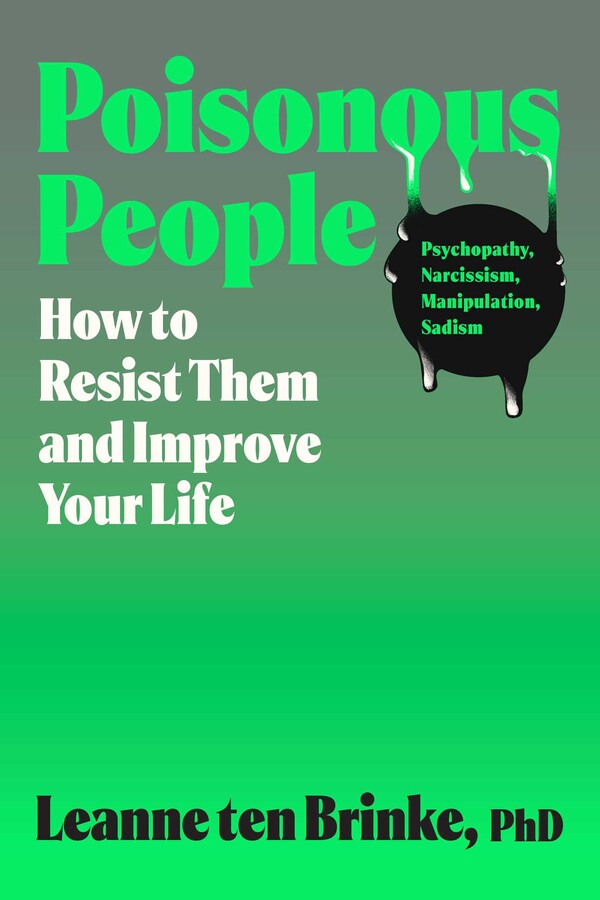
In Poisonous People, award-winning psychologist Dr. Leanneten Brinke offers a brilliant new perspective on darkpersonalities. Weaving together personal stories andpathbreaking research, she depicts a surprising reality: a small portion of the population causes most of the world’s suffering. People with psychopathic and related personalitytraits commit a disproportionate amount of crime, with an economic cost estimated in the trillions of dollars. They also poison communities by spreading negativity, violating trust, and eroding norms. Fortunately, science offers powerful solutions. By understanding the harm dark personalities cause, identifying them when we see them, making informed decisions about whether to exit relationships with them, and knowing how to manage them when we decide to stay, we can dramatically reduce the pain we and others around us suffer.
In Poisonous People, ten Brinke gives us powerful, science-based tools for navigating dark personalities in a range ofevery day contexts. As she argues, we have the power to reduce their power over us, whether at home, at school, atwork—even in the political realm.
Poisonous People showsus how to use that power to improve our lives—and the world.
Leanne ten Brinke provides a large number of short video’s discussing this topic and related items on instagram, tiktok, X, facebook, youtube, and is also on Google Scholar.
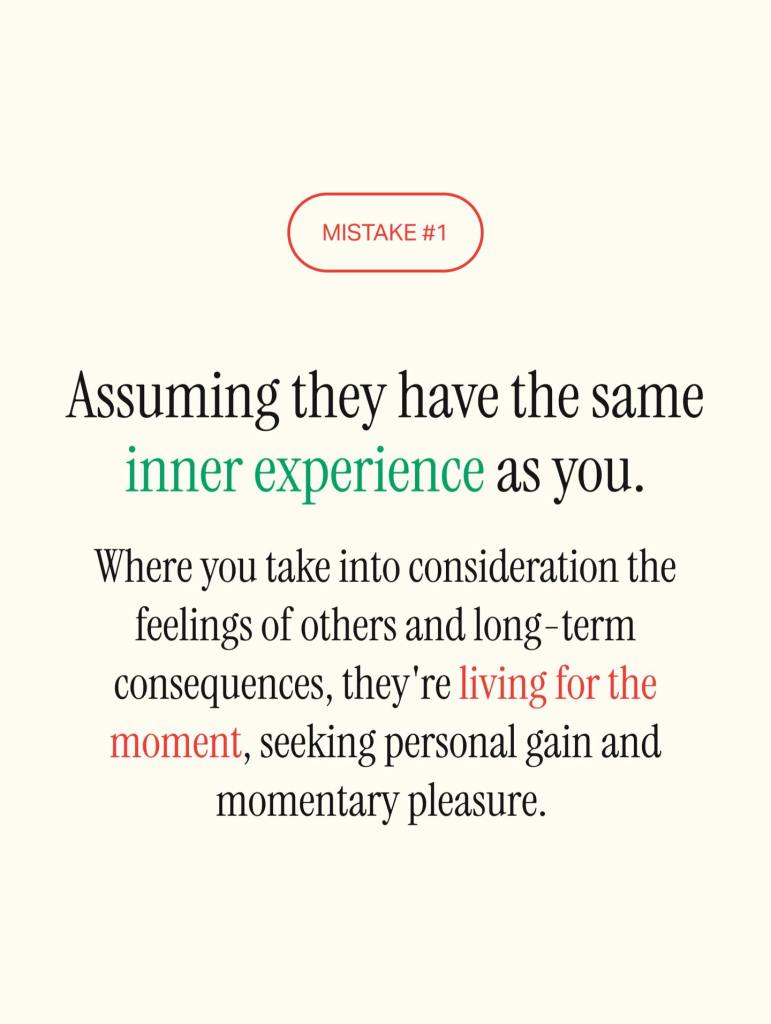
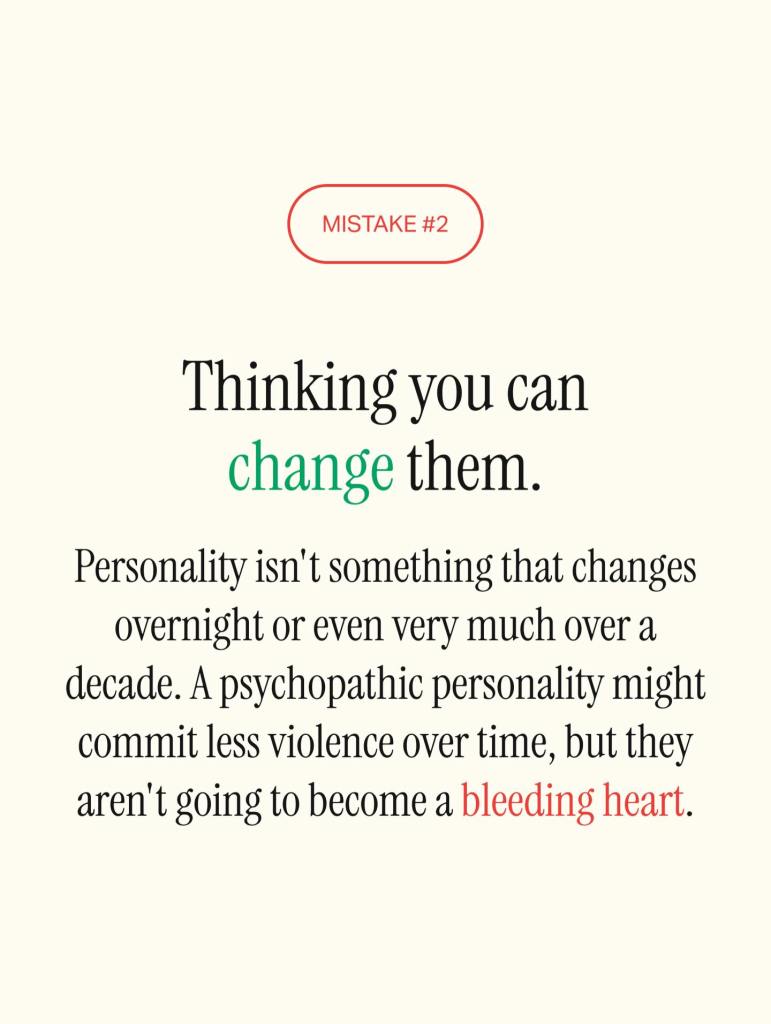
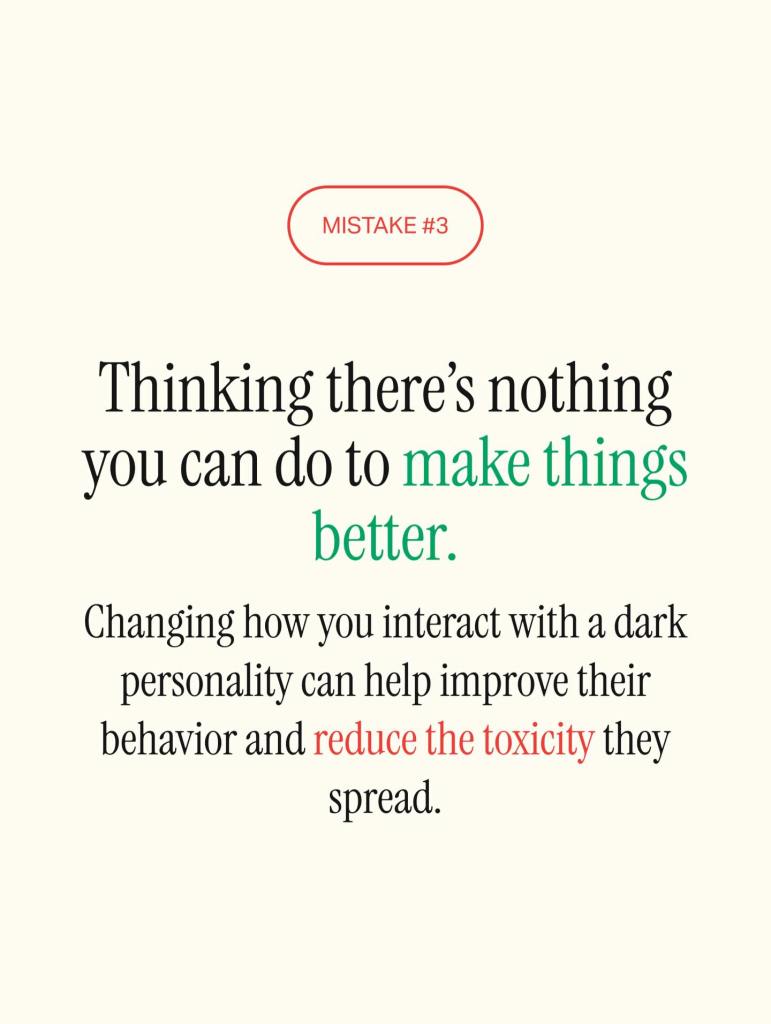
Abstract created by lumo
Poisonous People: How to Resist Them and Improve Your Life,
by Leanne ten Brinke, Ph.D.
- Why the Book Exists – The Problem of “Poisonous” People
What are “poisonous” people?
Individuals whose dark personality traits—psychopathy, narcissism, manipulation, sadism—systematically harm those around them. They appear in families, friendships, workplaces, and even high-level institutions such as governments and corporations.
How widespread is the problem?
Research shows a relatively small proportion of people generate a
disproportionate amount of misery for the rest of society
Why does it matter now?
Modern, highly connected environments (social media, remote work, globalized politics) amplify the reach of these personalities, making it easier for them to infiltrate many aspects of daily life.
The book opens by positioning these “poisonous” individuals not as rare monsters but as a predictable class of personalities that can be identified, understood, and managed with the right tools. - Scientific Foundations – Dark Personality Traits
Psychopathy
Lack of empathy, shallow affect, strategic manipulation, willingness to exploit others for personal gain.
Ten Brinke’s own lab work on incarcerated offenders and corporate leaders demonstrates how psychopathic traits predict deceitful behavior.
Narcissism
Grandiosity, entitlement, constant need for admiration, fragile self-esteem that triggers aggression when challenged.
Empirical studies link narcissistic tendencies to workplace bullying and relationship sabotage.
Manipulation / Machiavellianism
Calculated social tactics to control outcomes, often hiding true intentions.
The book draws on classic “dark triad” literature and newer findings from the Truth and Trust Lab at UBC.
Sadism
Deriving pleasure from inflicting pain or humiliation on others.
Recent experimental work shows sadistic traits correlate with aggressive decision-making in high-stakes environments.
Ten Brinke emphasizes that these traits exist on continua; most people display low levels, but a minority sit at the extreme end where their impact becomes “poisonous.” - Identifying Poisonous People – Practical Checklists
1. Pattern Recognition
Look for repeated cycles of charm → exploitation → discard.
2. Behavioral Red Flags
Gaslighting, chronic lying, blaming others for personal failures, and an inability to accept accountability.
3. Contextual Clues
Toxic individuals often thrive in environments lacking strong oversight (e.g., unregulated teams, loosely governed institutions).
The author provides a concise “Poisonous-Person Radar” (a mental checklist) that readers can apply in real time, whether during a job interview, a family gathering, or a political debate - Strategic Responses – How to Reduce Their Power
1 Pre-emptive Strategies
Potential Partner
Conduct a “values audit”: compare their stated goals with observable actions over several weeks.
Workplace
Build strong, transparent processes (e.g., documented decisions) that limit opportunities for covert manipulation.
Community / Politics
Support institutional checks (ethics committees, whistleblower protections) that expose hidden agendas.
These steps aim to limit the opportunity for poisonous people to gain footholds.
2 When You’re Already Entangled
1. Boundary Reinforcement – Clearly articulate limits and enforce consequences when they are crossed.
2. Information Control – Keep sensitive data (financial, personal) compartmentalized; share only on a need-to-know basis.
3. Strategic Disengagement – If possible, exit the relationship; if not, adopt a “low-contact, high-awareness” stance where you remain functional but emotionally insulated.
Ten Brinke stresses that disengagement is not always feasible (e.g., family members, legal obligations), so learning how to survive within the relationship is crucial google.com.
3 Long-Term Resilience
• Self-Education – Understanding the psychology behind dark traits reduces fear and improves decision-making.
• Social Support Networks – Cultivate allies who can validate experiences and provide safe exits.
• Mental-Health Practices – Mindfulness, therapy, and stress-reduction techniques protect against the cumulative emotional toll of dealing with toxic individuals. - Applications Across Domains
Romantic Relationships
Partners who gaslight, manipulate emotions, or isolate you from friends.
Early detection via pattern recognition; prioritize safety planning.
Workplace
Bullies who sabotage colleagues, executives who exploit subordinates for profit.
Institutional safeguards (transparent metrics, peer reviews) diminish their influence.
Politics & Governance
Lawmakers who use deception for personal gain, lobbyists who manipulate policy.
Public awareness and robust investigative journalism act as societal “antidotes”.
Family
Relatives who shirk responsibility, shift blame, or create chronic drama.
Set firm boundaries; seek external counseling when necessary.
The book’s breadth shows that the same psychological mechanisms operate at micro- (personal) and macro- (societal) scales, reinforcing the idea that individual vigilance contributes to collective well-being - Tone and Outlook – Optimism Meets Realism
Ten Brinke adopts an optimistic yet evidence-based tone.
While acknowledging the genuine danger posed by dark personalities, she repeatedly asserts that people have agency: knowledge plus concrete tools can dramatically reduce the harm inflicted by poisonous individuals.
The narrative blends scientific exposition with relatable anecdotes, making the material accessible without sacrificing rigor. - Key Take-Home Messages
1. Dark personalities are a measurable, scientifically validated phenomenon that disproportionately generate suffering.
2. Recognition is the first line of defense—learn the red-flag behaviors and apply the “Poisonous-Person Radar.”
3. Pre-emptive structural safeguards (transparent processes, strong ethics policies) limit opportunities for manipulation.
4. When entangled, enforce boundaries, control information flow, and, if possible, disengage; otherwise, adopt low-contact strategies.
5. Build resilience through education, supportive networks, and mental-health practices— the antidote to toxicity is both knowledge and community.
6. The fight is both personal and societal; each individual’s actions contribute to a healthier collective environment.
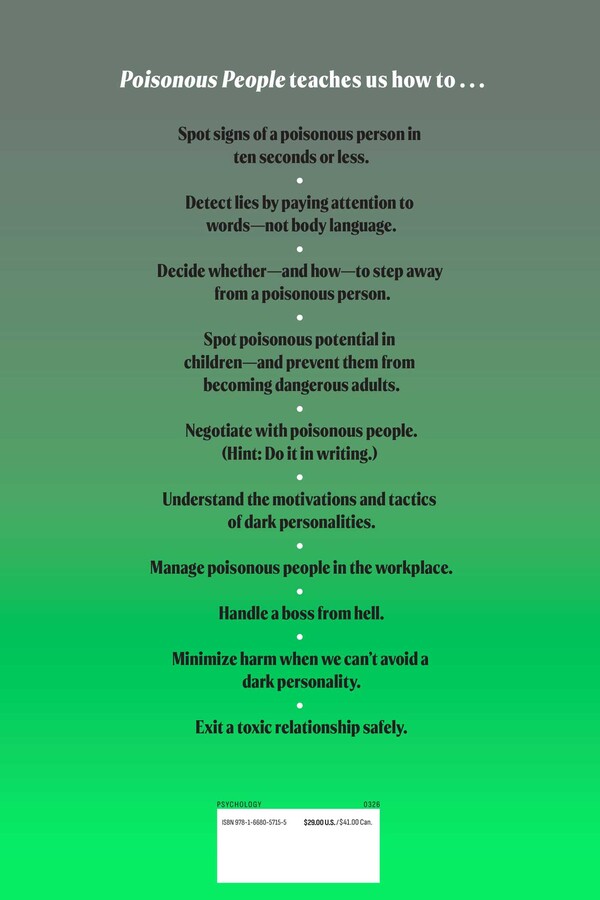
Poisonous People (Leanne ten Brinke) and The Science of Revenge (James Kimmel Jr.) line up, having following points of Alignment:
- Dark-personality traits are real, measurable constructs – Ten Brinke cites the “dark triad” (psychopathy, narcissism, Machiavellianism) while Kimmel points to the same traits in the people who become “revenge addicts” (e.g., bullies, abusive partners, extremist leaders).
- A small minority drives most damage – Both note that a minority of “poisonous” or “revenge-driven” people generate a disproportionate share of suffering in societies.
- Neuroscience matters – Ten Brinke’s lab work shows distinct brain-activation patterns in psychopathic subjects; Kimmel highlights fMRI evidence that personal grievance lights up the brain’s reward circuitry, the same circuitry implicated in addiction.
- Context amplifies risk – Environments with weak oversight (loose corporate governance, unmoderated online forums, poorly regulated justice systems) let these personalities act unchecked.
- Skill-based mitigation – Both books give concrete, evidence-based toolkits: Ten Brinke’s “Poisonous-Person Radar” and boundary-setting playbook; Kimmel’s “Non-Justice System”, “Miracle Court” app, and 12-step-style “Revenge Anonymous” program.
- Goal: protect the broader community – The ultimate aim is not just personal safety but a healthier collective (workplaces, schools, nations).
 Surtil :
One response to “Poisonous People”
[…] Leanne ten Brinke: Poisonous People […]
LikeLike