“The Science of Revenge, James Kimmel Jr.”
In this definitive book on revenge, James Kimmel, Jr., JD, exposes the unseen neurobiological cause of violence—the compulsive desire for retribution—and offers a profound new understanding of human behavior and breakthrough framework for making our lives and communities safer.
Yale violence researcher and psychiatry lecturer James Kimmel, Jr., JD, uncovers the truth behind why we want to hurt the people who hurt us, what happens when it gets out of hand, and how to stop it.
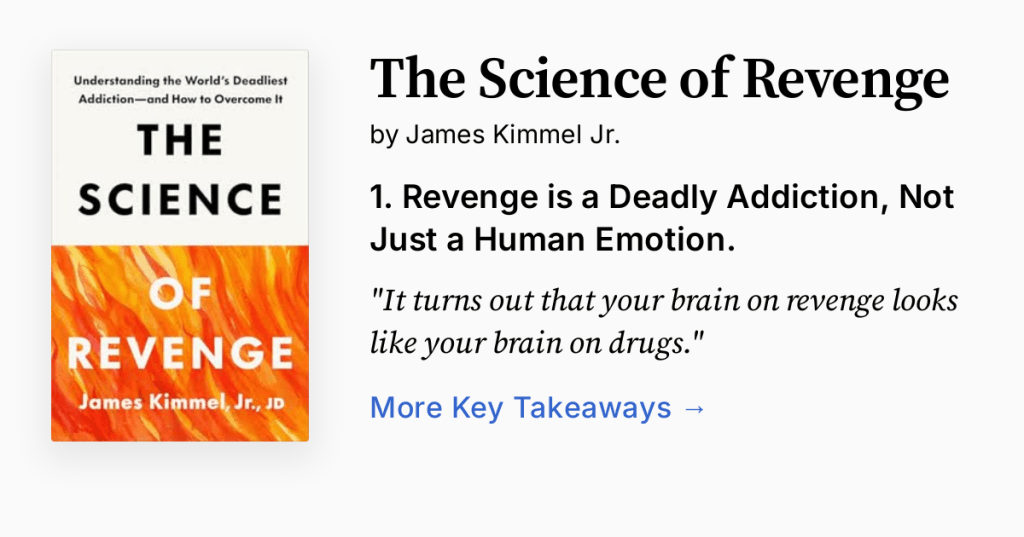
There is a hidden addiction plaguing humanity right now: revenge. Researchers have identified retaliation in response to real and imagined grievances as the root cause of most forms of human aggression and violence. From vicious tweets to road rage, murder-suicide, and armed insurrection, perpetrators almost always see themselves as victims seeking justice. Chillingly, recent behavioral and neuroimaging studies of the human brain show that harboring a personal grievance triggers revenge desires and activates the neural pleasure and reward circuitry of addiction.
Although this behavior is ancient and seems inevitable, by understanding retaliation and violence as an addictive brain-biological process, we can control deadly revenge cravings and save lives. In The Science of Revenge, Dr. Kimmel uncovers the truth behind why we want to hurt the people who hurt us, what happens when it gets out of hand, and how to stop it.
Weaving neuroscience, psychology, sociology, law, and human history with captivating storytelling, Dr. Kimmel reveals the neurological mechanisms and prevalence of revenge addiction. He shines an unsparing light on humanity’s pathological obsession with revenge throughout history; America’s growing addiction to revenge as a special brand of justice; his own struggle with revenge addiction that almost led to a mass shooting; and the startlingly similar addictive behaviors and motivations of childhood bullies, abusive partners, aggrieved employees, sparring politicians, street gang members, violent extremists, mass killers, and tyrannical dictators responsible for millions of deaths. He also reveals the amazing, healing changes that take place inside your brain and body when you practice forgiveness. Stressing the necessity of proven public health approaches and personal solutions for every level of revenge addiction, he offers urgent, actionable information and novel methods for preventing and treating violence.
Book Summary by lumo
The Science of Revenge by James Kimmel Jr., JD
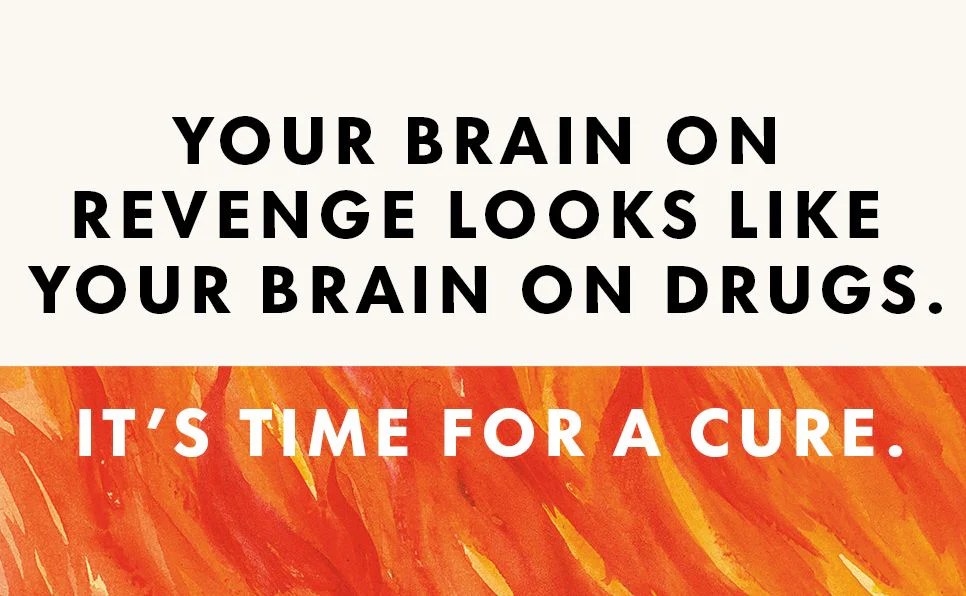
The Science of Revenge explores why humans feel a powerful urge to retaliate against those who have harmed them, framing revenge as a form of addiction rooted in brain chemistry. Drawing on neuroscience, psychiatry, and legal experience, Kimmel shows how the same neural pathways that drive substance‑use disorders light up when we imagine or enact revenge .
Core Themes
| Theme | What the book explains |
|---|---|
| Revenge as an addiction | The craving for retaliation activates reward circuits (dopamine‑rich regions) much like drugs, creating a compulsive loop that can spiral into violence. |
| Biological basis | Brain imaging studies reveal that thoughts of revenge trigger the nucleus accumbens and related structures, explaining why the feeling can be pleasurable despite its destructive outcomes . |
| Social and cultural amplification | Media, politics, and group identity can magnify revenge drives, turning personal grudges into collective movements and even mass violence. |
| Consequences of unchecked revenge | Persistent revenge cravings contribute to cycles of aggression, higher rates of homicide, and broader societal instability . |
| Pathways to recovery | Kimmel proposes “revenge rehabilitation” – therapeutic interventions, community‑based “Revenge Anonymous” groups, and digital tools (e.g., the Miracle Court app) that help individuals rewire their responses and replace retaliation with restorative practices. |
Key Insights
- Neuro‑biological addiction – Revenge is not merely a moral choice; it is driven by the brain’s reward system, making it resistant to rational persuasion alone.
- Addiction model informs treatment – By treating revenge cravings like other addictions (12‑step programs, cognitive‑behavioral strategies), people can achieve lasting change.
- Tools for “non‑justice” – Kimmel’s Nonjustice System and the Miracle Court app provide structured, non‑violent outlets for grievance processing, aiming to satisfy the desire for accountability without physical harm.
- Public‑health perspective – Framing revenge as a public‑health issue encourages policy makers to fund prevention programs, education, and community support networks.
Why It Matters
Understanding revenge as a brain‑based addiction reshapes how we address interpersonal conflict, criminal justice, and societal violence. The book offers both scientific explanations and practical solutions, suggesting that reducing revenge cravings could lower rates of aggression and improve overall social cohesion.
The book offers a sultion for foregiving by describing the Nonjustice System and the Miracle Court app. The miracle court app is available and allows to GET JUSTICE and more.
When you’ve been hurt or victimized, you want justice. You want the person who hurt you to be held accountable. You want to feel better again. You want to move on.
The Miracle Court App™ is based on the book The Science of Revenge and The Nonjustice System created by lawyer, psychiatry lecturer and author James Kimmel, Jr., JD.
With the Miracle Court App™, you become the central character in the trial of the person who harmed you and play all the roles — prosecutor, victim, defendant, judge, warden, and even judge of your own life. It’s an amazing experience that combines law, psychology, and spirituality.
University research shows that Miracle Court™/Nonjustice System trials can help people experience getting justice, reduce destructive and addictive revenge cravings, and “move on” from the trauma and victimization of the past. The Miracle Court App™ gives you access to the most powerful courtroom in the world — the one inside your own mind — and helps you discover that the greatest lawyer and judge in the world is actually you. That’s the miracle of Miracle Court™.
The Miracle Court App™ offers all this and more. It’s a virtual courthouse that allows you to put anyone on trial for anything they’ve ever done to you or someone you love. It allows you to experience getting justice and can help you move on from the pain and trauma of the past.
It is free 🙂

Poisonous People (Leanne ten Brinke) and The Science of Revenge (James Kimmel Jr.) line up, having following points of Alignment:
- Dark-personality traits are real, measurable constructs – Ten Brinke cites the “dark triad” (psychopathy, narcissism, Machiavellianism) while Kimmel points to the same traits in the people who become “revenge addicts” (e.g., bullies, abusive partners, extremist leaders).
- A small minority drives most damage – Both note that a minority of “poisonous” or “revenge-driven” people generate a disproportionate share of suffering in societies.
- Neuroscience matters – Ten Brinke’s lab work shows distinct brain-activation patterns in psychopathic subjects; Kimmel highlights fMRI evidence that personal grievance lights up the brain’s reward circuitry, the same circuitry implicated in addiction.
- Context amplifies risk – Environments with weak oversight (loose corporate governance, unmoderated online forums, poorly regulated justice systems) let these personalities act unchecked.
- Skill-based mitigation – Both books give concrete, evidence-based toolkits: Ten Brinke’s “Poisonous-Person Radar” and boundary-setting playbook; Kimmel’s “Non-Justice System”, “Miracle Court” app, and 12-step-style “Revenge Anonymous” program.
- Goal: protect the broader community – The ultimate aim is not just personal safety but a healthier collective (workplaces, schools, nations).
 Surtil :
2 responses to “The Science of Revenge”
[…] James Kimmel Jr.: The Science of Revenge […]
LikeLike
[…] People (Leanne ten Brinke) and The Science of Revenge (James Kimmel Jr.) line up, having following points of […]
LikeLike