
The problem extends across the globe. Researchers have studied compulsive shopping in many countries, including the United States, Turkey, Poland, Germany, India, Brazil, South Korea and Pakistan — where almost one-third of university students were classified as compulsive buyers in both physical stores and online.
Heping He, a marketing researcher at Shenzhen University in China, is one of many researchers around the globe who are investigating the prevalence of the problem as well as the brain pathways involved and how compulsive shopping relates to similar types of condition. But researchers studying these issues face a problem: there is no official diagnosis of shopping addiction or compulsive shopping, which could help to stimulate further research and aid with demands for regulation.
Compulsive shopping was once seen as problem that affected mostly women. But not all studies have found differences between genders, especially among younger shoppers.
Although data suggest that the problem is surging, there’s no official entry for shopping addiction or compulsive shopping in the two main references that are used to help make diagnoses: the International Classification of Diseases — which is maintained by the World Health Organization — and the Diagnostic and Statistical Manual of Mental Disorders (DSM).

One reason compulsive shopping is not yet a recognized disorder is a lack of consensus on its cause. Researchers debate whether it is brought about by a pathological level of impulsivity, a compulsion resembling obsessive–compulsive disorder or a behavioural addiction, activating reward pathways similar to those linked to drugs and alcohol.
The addiction model for compulsive shopping seems to be ascendant among specialists, as the broader category of behavioural addictions is increasingly accepted. Gambling disorder, which is in many ways similar to compulsive shopping, was added to the fifth edition of the DSM in 2013 and was grouped with addictions to substances.
“People do it at the beginning either to have fun or to solve a problem, from managing anxiety or depression to loneliness to boredom”,
Anna Lembke
“it changes their brains and they can’t stop“
Patrick Trotzke, a psychologist at Charlotte Fresenius University in Cologne, Germany, says. “The dopaminergic reward system is on fire.” This tends to weaken the control system in the prefrontal cortex, Trotzke adds, until affected individuals “no longer have control” over their purchasing behaviour.
The only empirically supported treatment for compulsive shopping is cognitive behavioural therapy, according to Trotzke.
The condition is a distinct entity that was “due to addictive behaviours” and settled on the name “compulsive buying disorder”.
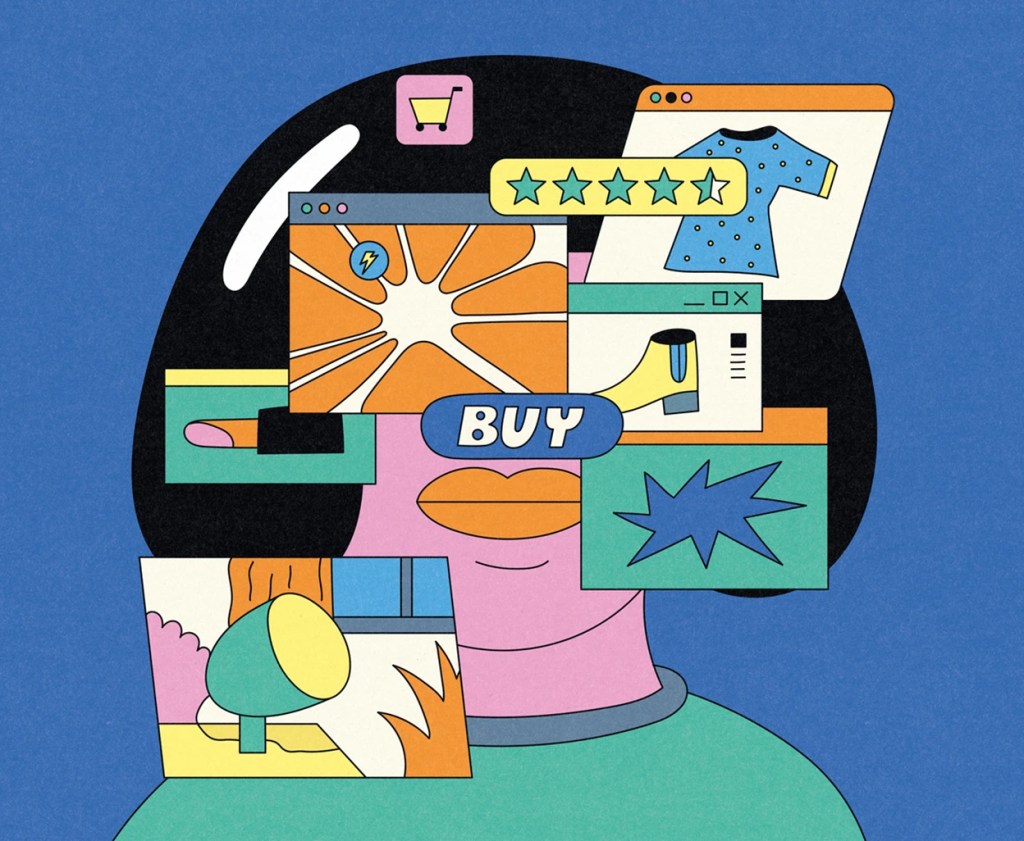
Sadie’s struggle (as a compulsive shopper) is not a new phenomenon. German psychiatrist Emil Kraepelin described krankhafte Kauflust — the pathological desire to buy — as early as 1899. But many specialists worry that the problem is getting much worse now — in part because of the rise of e-commerce companies such as Amazon, Chinese fast-fashion firm Shein and online marketplace Temu, some of which use game-like strategies to sell items.
In the meantime, self-described ‘shopping addicts’ are left to tackle their problems individually, either with the help of a professional or on their own. Communities of people with shopping problems congregate on social-networking platforms, where they share stories and encourage one another to change their habits. As a moderator on one of these forums, Sadie has recently cut back on shopping, saying that her “world view and priorities have shifted”.
Taking a break from endlessly scrolling through products has been revelatory for Sadie. “We are bombarded with feel-good mini jolts every time our phone pings,” she says. “We’re all running on a hamster wheel trying to hit that dopamine button in our brain again and again.”
 Surtil :