
The core of this post comes from “How do smart people make smart decisions?” by Gerd Gigerenzer, delivered at TEDxNorrköping – available at https://youtube.com/watch?v=-Lg7G8TMe_A and a transcript available .
However, there are more sources which lead to this insights, like e.g.:
- Gigerenzer & Selten Eds. 2001 Bounded rationality: The adaptive toolbox. MIT Press
- Gigerenzer, Hertwig & Pachur Eds. 2011. Heuristics: The foundations of adaptive behavior. OUP
- Gigerenzer 2007 Gut feelings: The intelligence of the unconscious. Penguin Books
- Jochen Reb, Shenghua Luan, Gerd Gigerenzer 2024, How Simple Heuristics Help Leaders Make Good Decisions in an Uncertain World MIT Press
RISK VS UNCERTAINTY
RISK: How should we make decisions when all relevant alternatives, consequences, and probabilities are known?
Requires statistical thinking
Look before you leap, analyse before you act. List all alternatives, all the consequences, and estimate the utilities. And do the calculation.
UNCERTAINTY: How should we make decisions when NOT all alternatives, consequences, and probabilities are known?
Requires smart rules of thumb (heuristics) and intuition
Decisions under UNCERTAINTY ≠ Decisions under RISK , or
Rationality of Risk ≠ Rationality of Uncertainty
1. UNCERTAINTY.
The best decision under risk is not the best decision under uncertainty.
2. HEURISTICS.
Heuristics are indispensable for good decisions under uncertainty.
They are not the product of a flawed mental system.
3. SIMPLICITY.
Complex problems do not require complex solutions.
4. LESS-IS-MORE.
More information, time, and computation is not always better.
How To Catch A Flyball
CALCULATE TRAJECTORY:

GAZE HEURISTIC:
1. Fix your gaze on the ball,
2. start running, and
3. adjust your running speed so that the angle of gaze remains constant.

(See also “are dogs outsmarting human primates“)
Heuristics Are Used Intuitively And Deliberately
Will the plane make it to LaGuardia Airport?
“It’s not so much a mathematical calculation as visual, in that when you are flying in an airplane,
a point that you can’t reach will actually rise in your windshield.
A point that you are going to overfly will descend in your windshield.”— Jeffrey Skiles Co-pilot, US Airways Flight 1549
The Science of Heuristics
The Adaptive Toolbox: What are the heuristics we use, their building blocks, and the evolved capacities they exploit?
Ecological Rationality: What types of environments does a given heuristic work in?
Intuitive Design: How can heuristics and environments be designed to improve decision making?
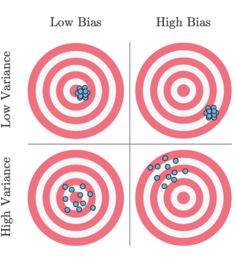
Ecological Rationality:
Total error = bias² + variance + noise
| Low uncertainty | High uncertainty |
| Few alternatives | Many alternatives |
| High amount of data | Small amount of data |
| Make it complex; Mean-Variance | Make it simple; 1/N |
The Social Heuristic: “Trust your doctor” is ecologically rational if:
1. Physicians don’t practice defensive decision making
2. are trained in understanding health statistics
3. have no conflicts of interest
 Surtil :