“Why Our Economic Intuitions Are Often Wrong”: Such tendencies stem from our evolutionary psychology. Adam Omary / April 21, 2026
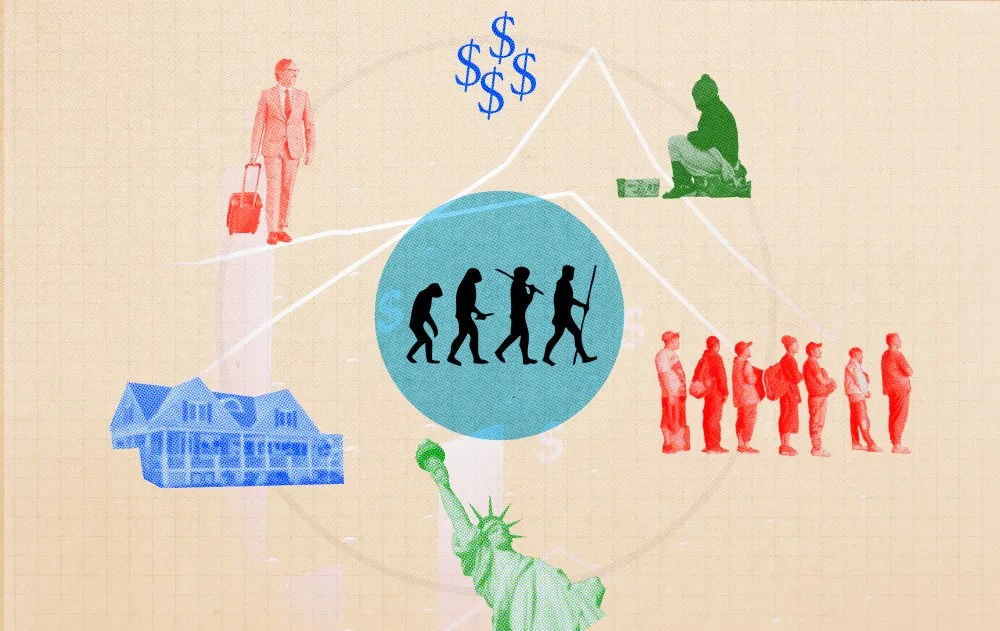
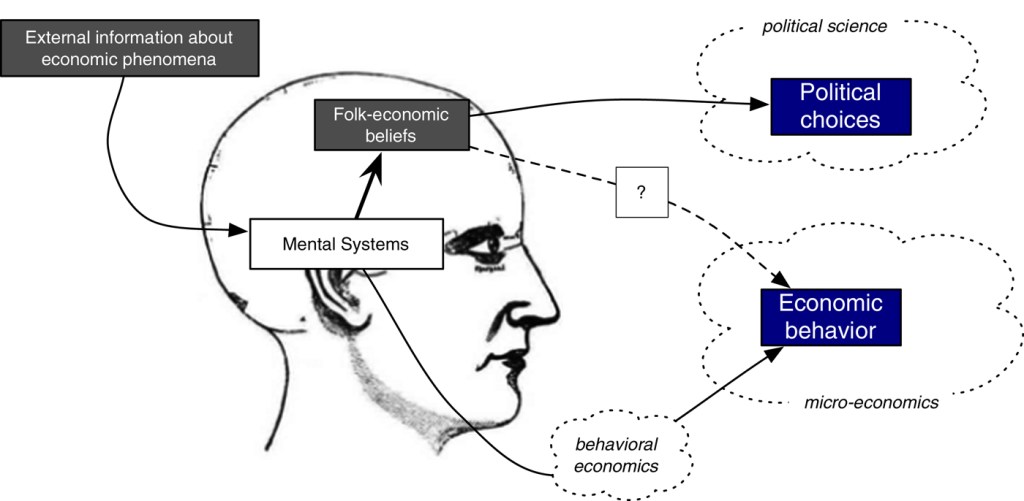
Perhaps the most parsimonious theory explaining why people often behave in economically harmful ways is the evolutionary cognitive model of folk-economic beliefs, proposed by anthropologist Pascal Boyer and political scientist Michael Bang Petersen. Folk-economic beliefs are those convictions about economics held by laypeople untrained in the discipline, which frequently diverge from fundamental economic tenets. These encompass mental representations of varied topics, from prices, taxes, and tariffs to welfare and immigration policies.
But our evolutionary psychology wasn’t built for comparative advantage, especially not across nations or tribes. Human groups historically competed for territory, food, and status in genuinely zero-sum ways. If a rival coalition grew stronger, it often meant danger for one’s own group. When modern individuals read that another nation is exporting more goods to us or running a trade surplus, our tribal instincts activate automatically. Nations are cognitively represented as tribes, and the success of one tribe is interpreted as a threat to another. The idea that both sides could benefit simultaneously—one of the central insights of the founder of economics, Adam Smith—runs against these deeply ingrained intuitions.
Human beings are unusual among species in our ability to revise intuitive judgments through abstract reasoning and accumulated knowledge. Economic theory, empirical evidence, and institutional experimentation provide ways of testing whether our intuitions about markets actually match the systems we inhabit. Over time, societies that learn to distinguish between intuitions that promote cooperation and those that misread economic signals tend to design more effective institutions.
Much of the progress of the last two centuries reflects this process of institutional learning precisely. Expanding trade networks, protecting property rights, encouraging innovation, and allowing prices to coordinate decentralized decisions have produced levels of prosperity that would have been unimaginable in the environments where our economic intuitions evolved. Understanding the evolutionary roots of folk-economic beliefs, therefore, helps explain why certain policy ideas remain politically attractive despite poor outcomes—and why sustained progress often depends on institutions that counteract some of our most natural intuitions while reinforcing others that support cooperation, openness, and exchange.

