
Design for Well-Being and Sustainability: A Conceptual Framework of the Peer-to-Peer Sharing and Reuse Platform in the Circular Economy investigates how to infuse well-being components into the circular economy.
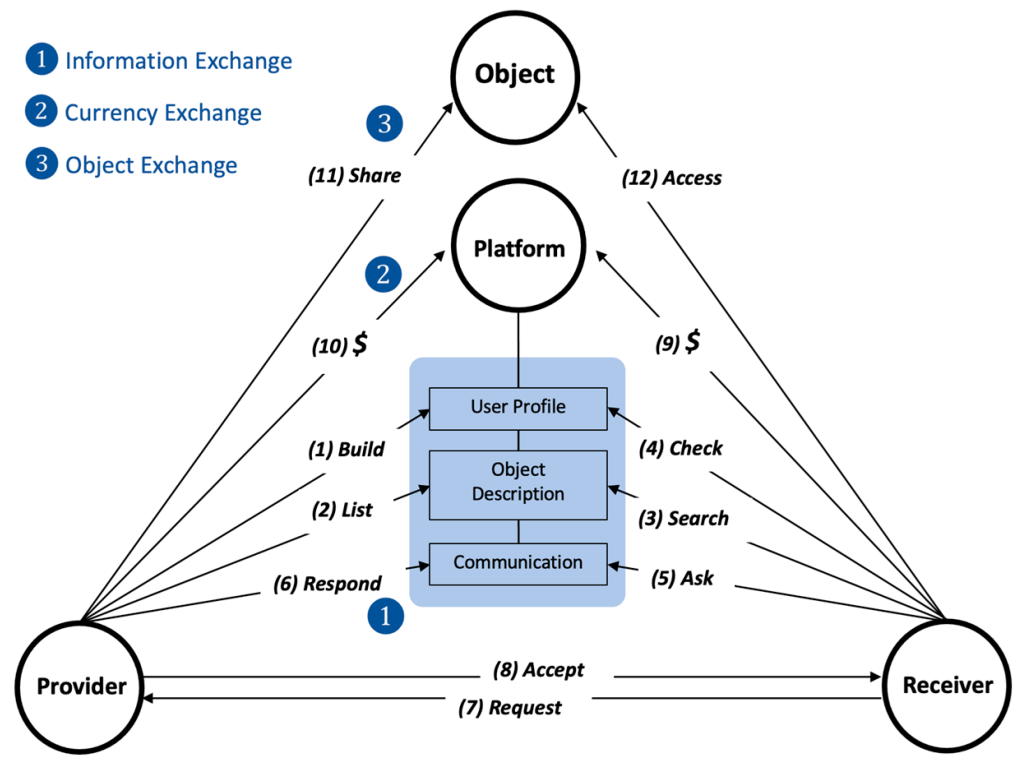
Based on the literature review, it organized and analyzed the extant evidence of related well-being-based research to develop an ecosystem model of a sustainable product–service system (PSS), especially a P2P sharing and reuse platform, and examined the potential relationships among all well-being components and sharing behaviors.
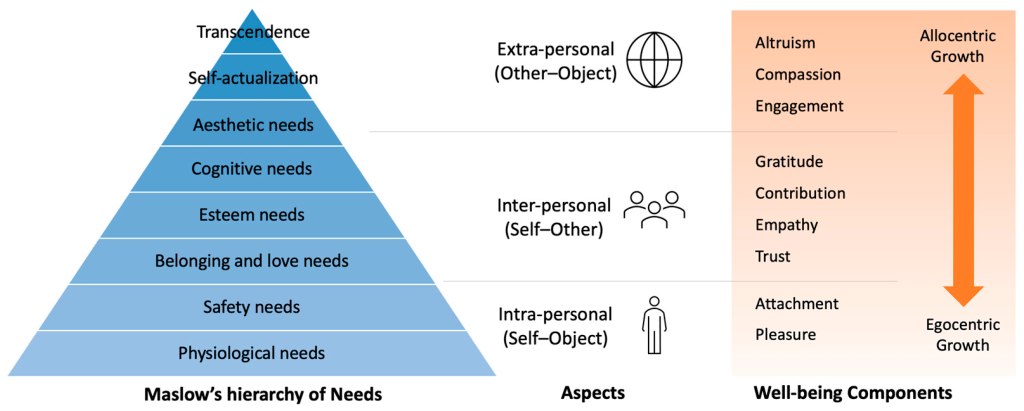
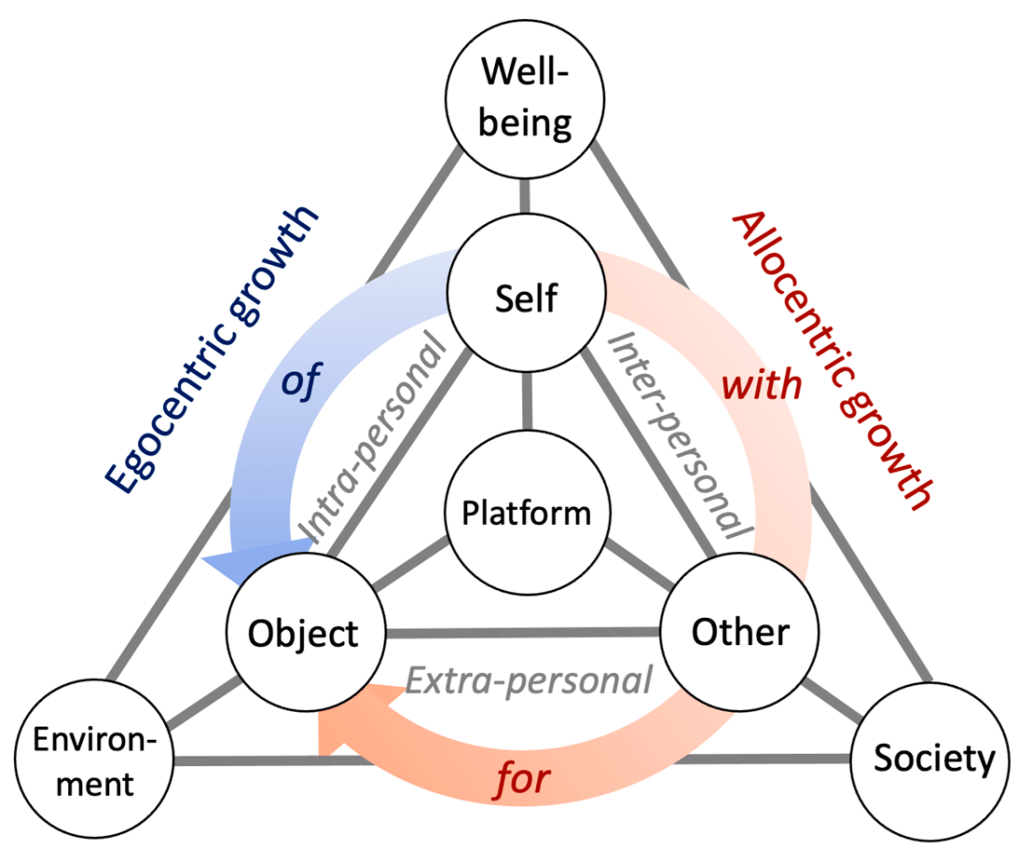
The study proposes that both egocentric growth and allocentric growth of well-being need to be considered in a sustainable PSS. We intended to encourage users who are motivated by egocentric benefits to adopt an allocentric perspective. Thus, we provided the HPES model (Hyper-Pyramid-Eco-System) and well-being-based design guidelines to draw people’s attention to the inter-personal well-being (trust, empathy, and contribution) and extra-personal elements (compassion and altruism) present on P2P sharing platforms to circulate sharing and reuse behaviors.
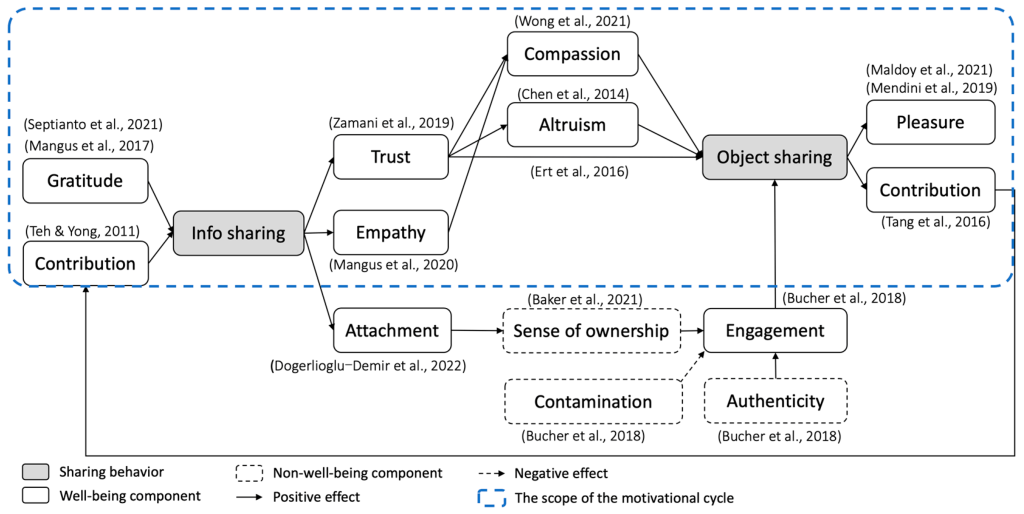
According to the findings,
(1) allocentric well-being components (such as gratitude, contribution, and altruism) serve as the antecedents of sharing behaviors, while egocentric components (such as pleasure and attachment) serve as the consequences, and
(2) information sharing is crucial to initiating the flow of well-being perceptions and sustainable sharing and reuse behaviors.
In addition to structuring the well-being components, we also found that information sharing was crucial for initiating a flow of perceptions of well-being and sharing behaviors. Information exchanged on platforms can be enhanced by improving user profiles, object descriptions, and communication.
Finally, the study discussed active inference approaches.
Compared to the data-driven approach that extracts external information based on human behaviors, the computational neuroscience approach provides a different perspective to research on human internal states. Active inference as a united approach to explaining the human brain and mind has gained growing popularity recently. It models the neurocognitive processes inside humans and the reactions between humans and the environment (i.e., perception and action). Active inference can show not only the human’s internal states but also the contextual and social factors which affect human perception and action. In addition, based on the concepts that all the adaptions of organisms need to minimize free energy, it applies the free energy principles to explain how we predict, perceive, and react based on our generative models, beliefs of hidden states, and observation of the world.
Active inference helps explain human emotions, communication, and subjective well-being. Especially, in the past, well-being was mainly evaluated by self-report, but the free energy principles and active inference provide computational ways of explaining the complex mental mechanisms and how people attain higher well-being; these principles are rather new and have the potential to be developed. In the setting of active inference experiments, researchers can design the platform layouts and test the participants’ behaviors and subjective assessments to examine the perception and inference of well-being components. Taking empathy as an example, participants receive virtual sharing information and may infer that an other-sided user who has a similar background is more empathetic and intentional to share with.
 Surtil :
One response to “Design for Well-Being and Sustainability”
[…] naar “active inference” en “free energy principle” zoals o.a. besproken in Design for Well-Being and Sustainability: “The relationships among well-being components in sharing and reuse contexts”. […]
LikeLike